Hwange National Park
Hwange National Park (Zimbabwe)
The first leg of our sixteen-day safari started in Hwange National Park, Zimbabwe. The largest natural reserve in the country, the park stretches over 5600 square miles. This park made news in 2015, with the hunting death of a lion, Cecil.
Cecil The Lion
In July 2015, American trophy hunter Walter Palmer killed a lion, Cecil. Cecil had lived in Hwange National Park for thirteen years. Palmer paid 55,000 USD to hunt a lion with a bow and arrow. Local hunting guides ended up facing consequences for illegal actions, while Palmer’s permits protected him from prosecution. The guides illegally lured Cecil from the park using an elephant carcass as bait. The incident sparked outrage once stories ciculated the Internet, leading to hunting reforms in Zimbabwe. Xanda, Cecil’s son, ended up killed in a legal trophy hunt two years later.
Entering Zimbabwe

Some Serious Shit
Dung and dung beetles play a vital environmental role. By removing dung, they protect animals from flies and disease. When the bury dung, that plants seeds and improves soil, with nutrient recycling.

Beer
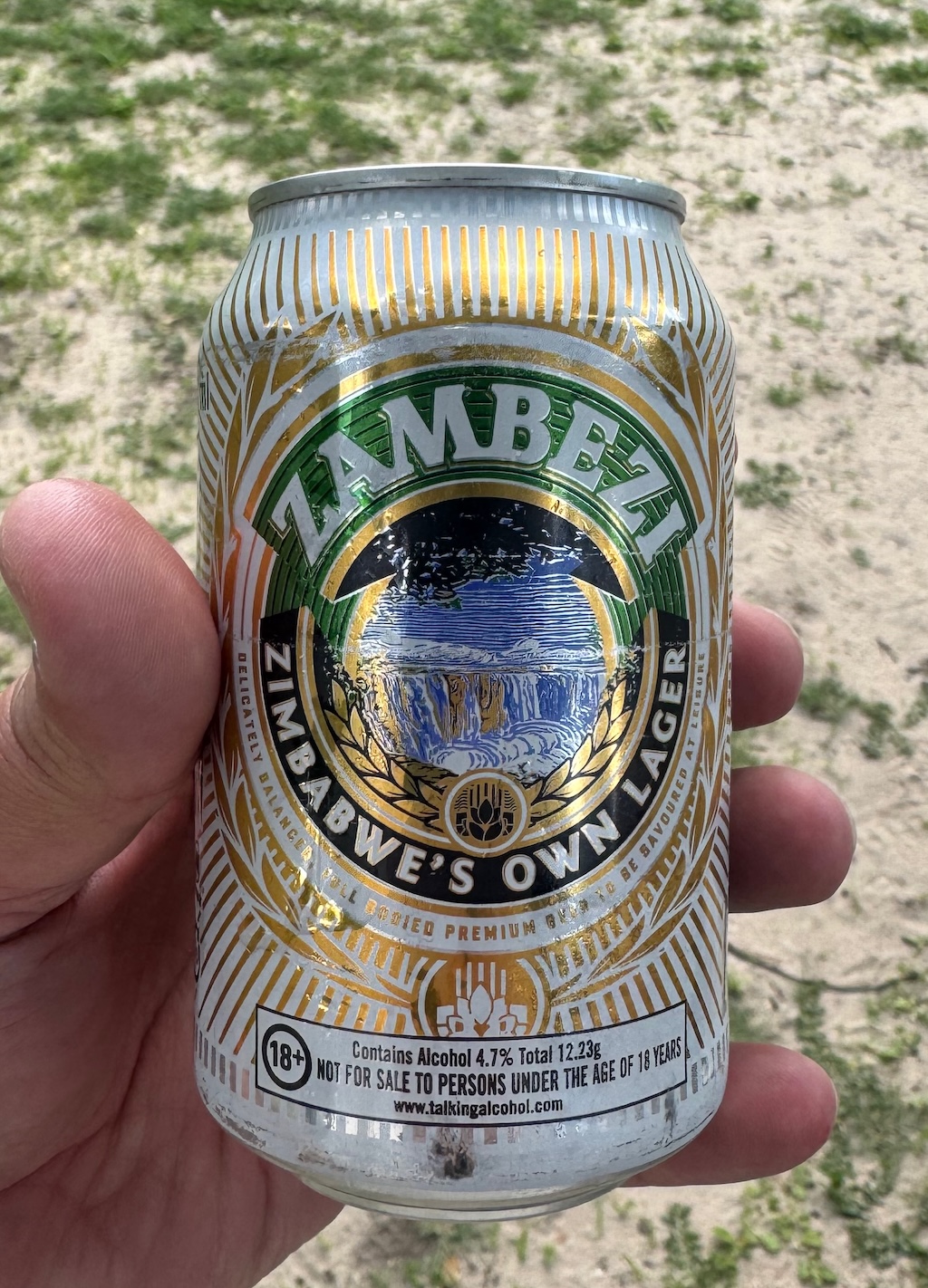
On our first stop, I got to try a local beer, Zambezi. Available since 1992, the beer gets its name from the Zambezi River of Zimbabwe. On a hot day, nothing beats an ice-cold lager.
One day, we visited a village, to better understand the life of an average family in Zimbabwe. We stopped at the edge of the village for a restroom break. Well, I happened to spot a pub and thought I should buy a drink.
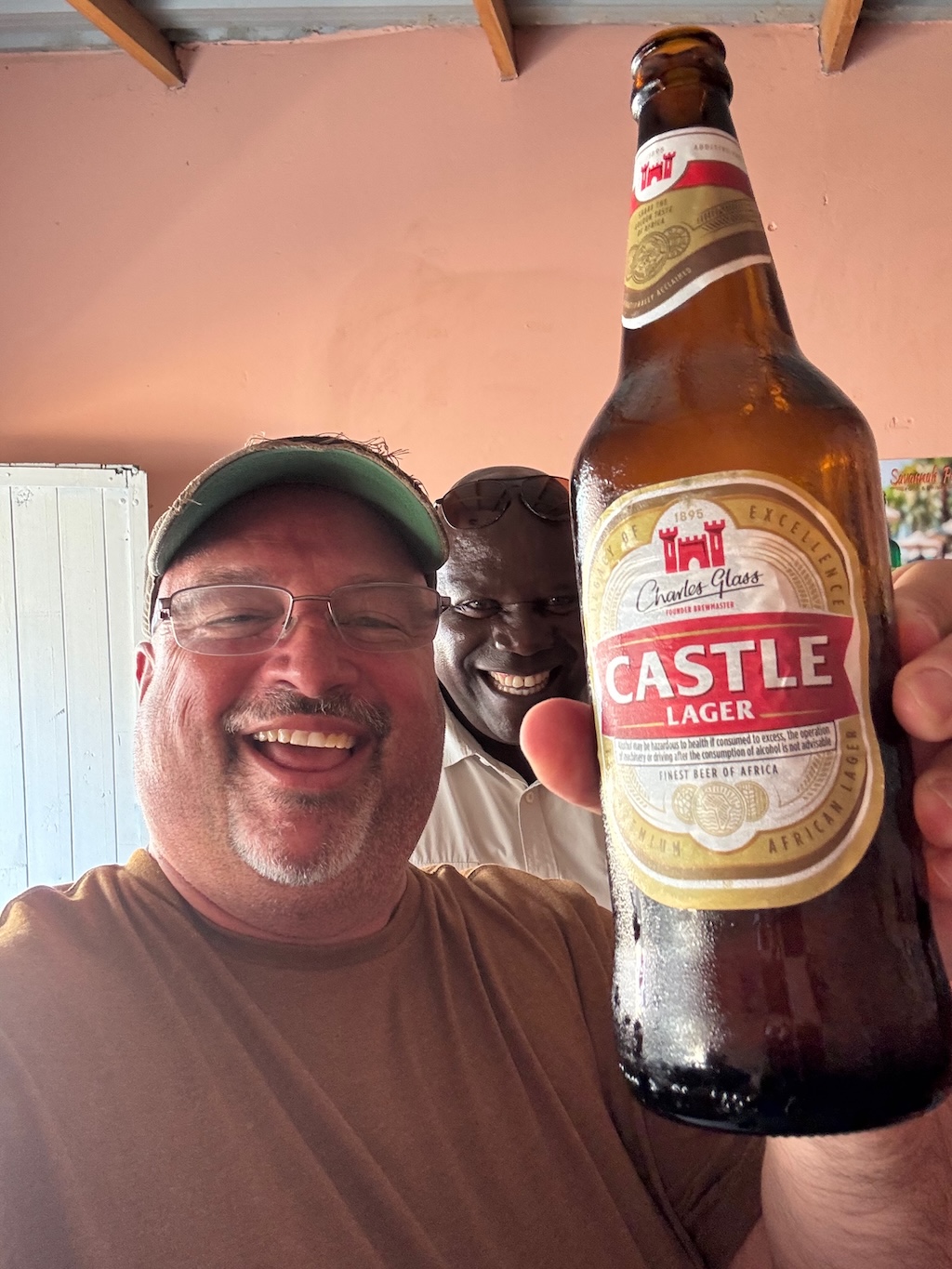
Albert, one of the guides, came with me to the pub and had me try a Castle lager. This South African beer ends up a bit stronger in flavor and alcohol content than Zambezi.
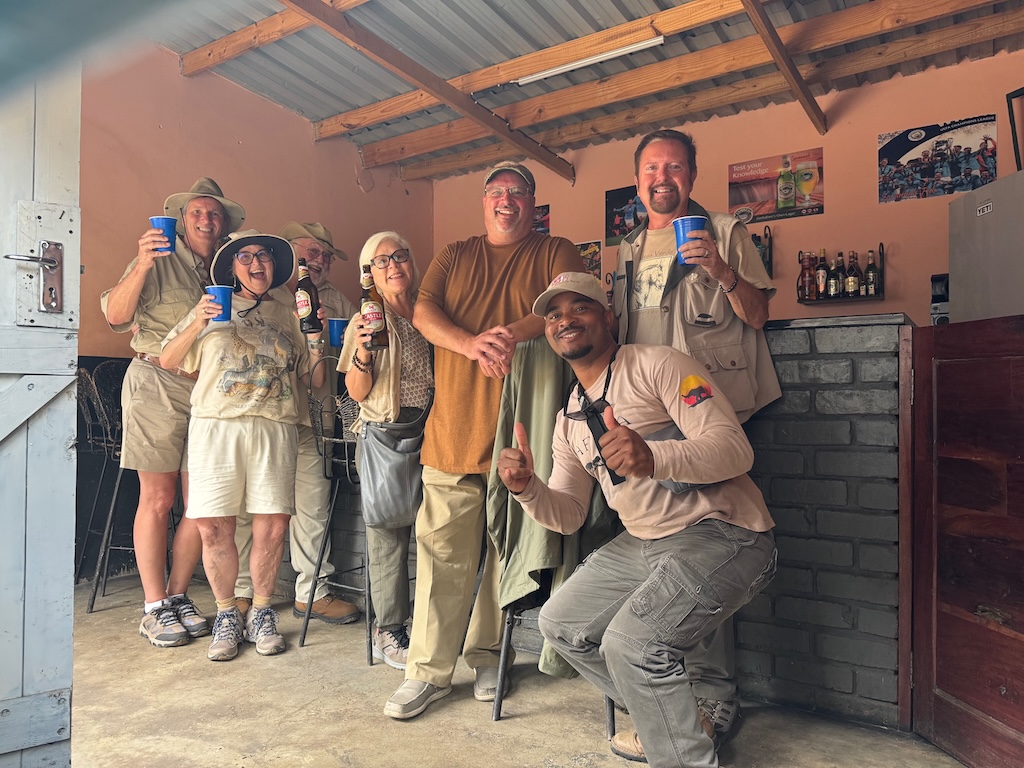
It did not take too long for some others to find me and join me for a beer.
Ngamo Village
Roughly 120 families comprise the Ngamo Village, a location where our group got a chance to learn about life in Zimbabwe. Given an amount of money and a few words in the local language, we split into smaller groups to buy supplies at the local market. I took the opportunity to also purchase old currency, worthless due to hyperinflation. Zimbabwe now mostly uses the US dollar. I ended up with Zimbabwean notes from 1 to 100 trillion dollars.
Invited into one family’s home, we got to have a question and answer session. Topics included education, work and travel. I got to pound millet and a few group members tried fruits grown on the property. One interesting thing: they had two mango trees, where the types ripen at different times, extending the availability of fruits to eat.
Elephants
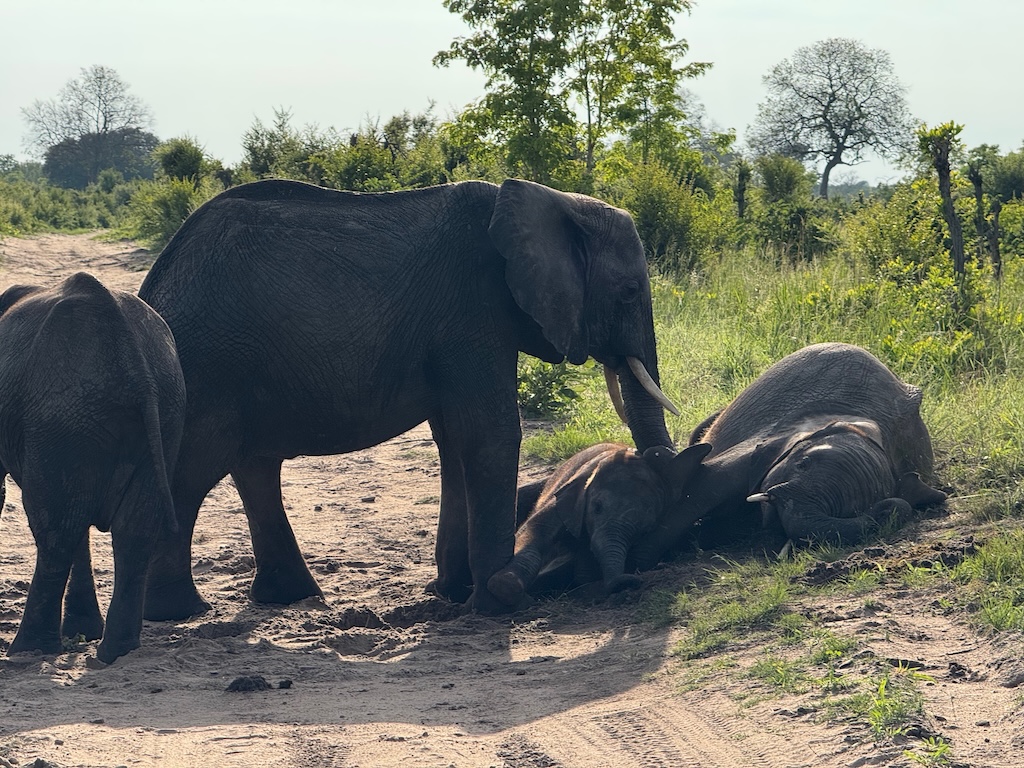
On our drive back into the park, we came across an elephant roadblock.
We also passed by the bones of an elephant. The hollow structure of the skull reduces weight, otherwise the elephant could not hold its head up.

Lions and Zebra
Of all the animals spotted in Hwange, including some rare antelope sightings of sable and eland, we ended up only approaching a limited few closely. Two that come to mind: lions and zebra.
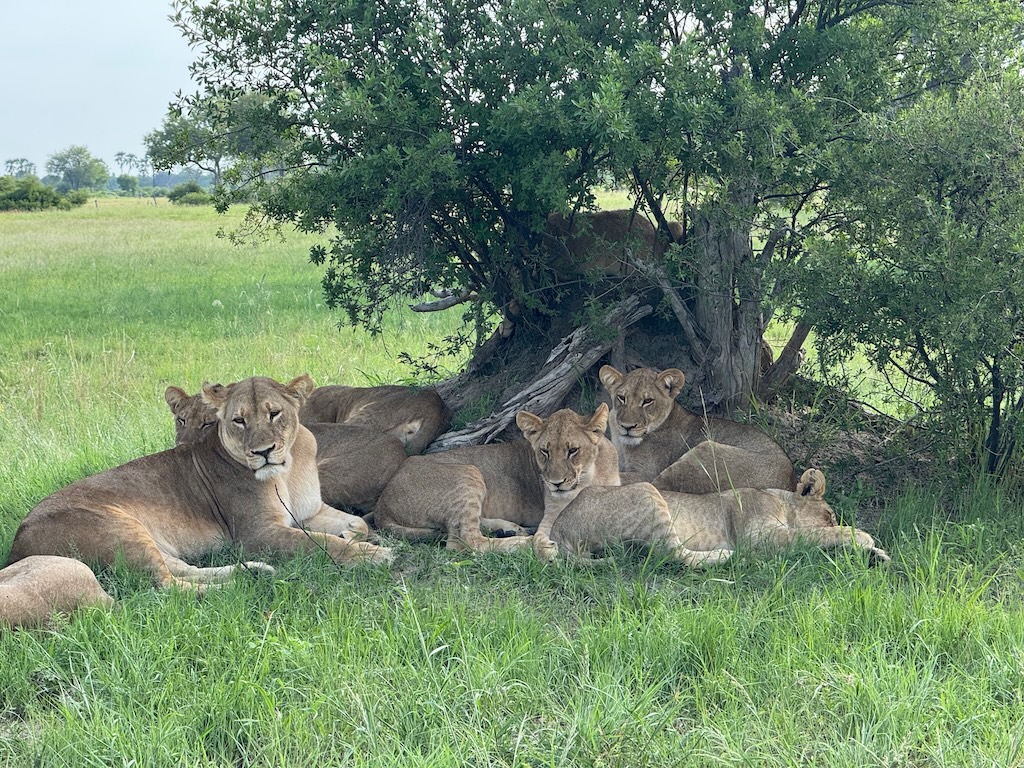
We encountered a group of lions resting.
And, I got a good shot of a zebra.

Safari
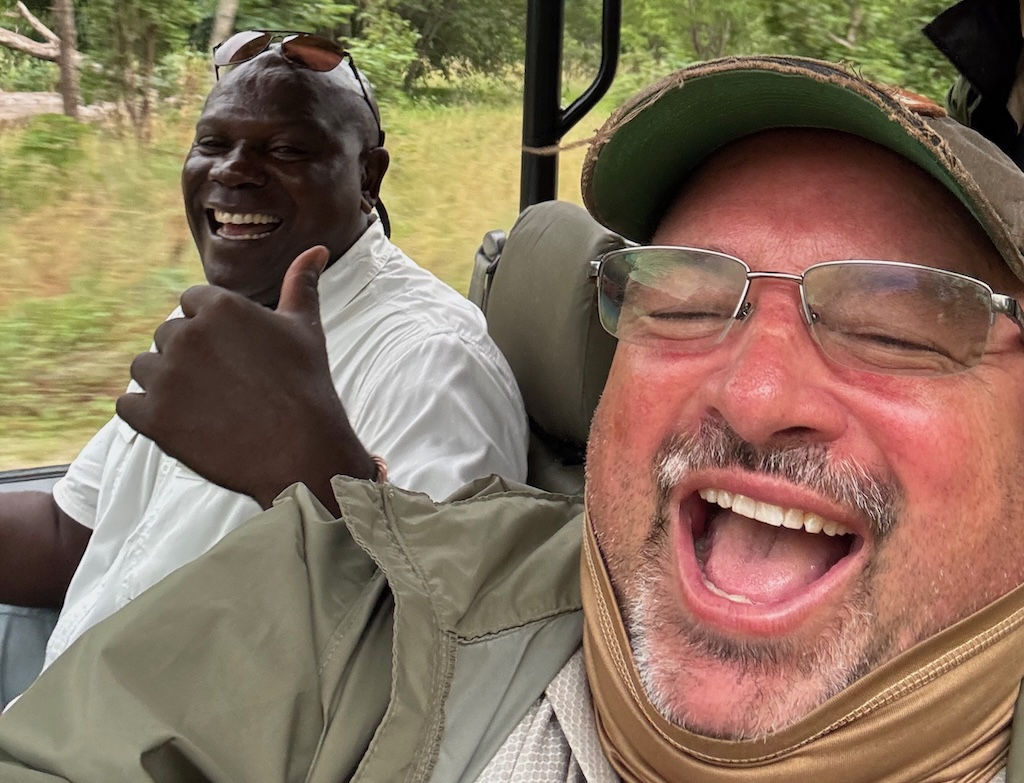
I cannot say enough good things about the Hwange camp staff. One guide and I became fast friends and we spent nearly every minute together laughing.
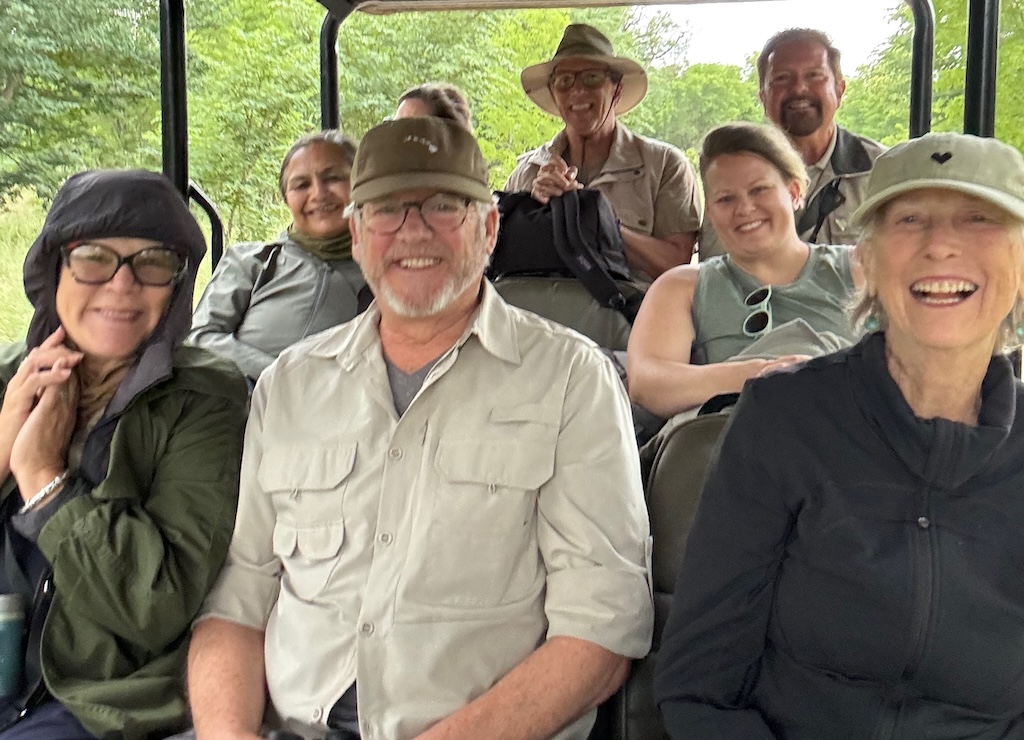
The sixteen campers ended up split between two game drive vehicles. One morning, I snapped a photo over my head of the folks in with me. So, out of the sixteen folks, ten of us know each other as friends or friends of friends (or family). In this photo, five people, with me as the sixth, live in the same Reno community.
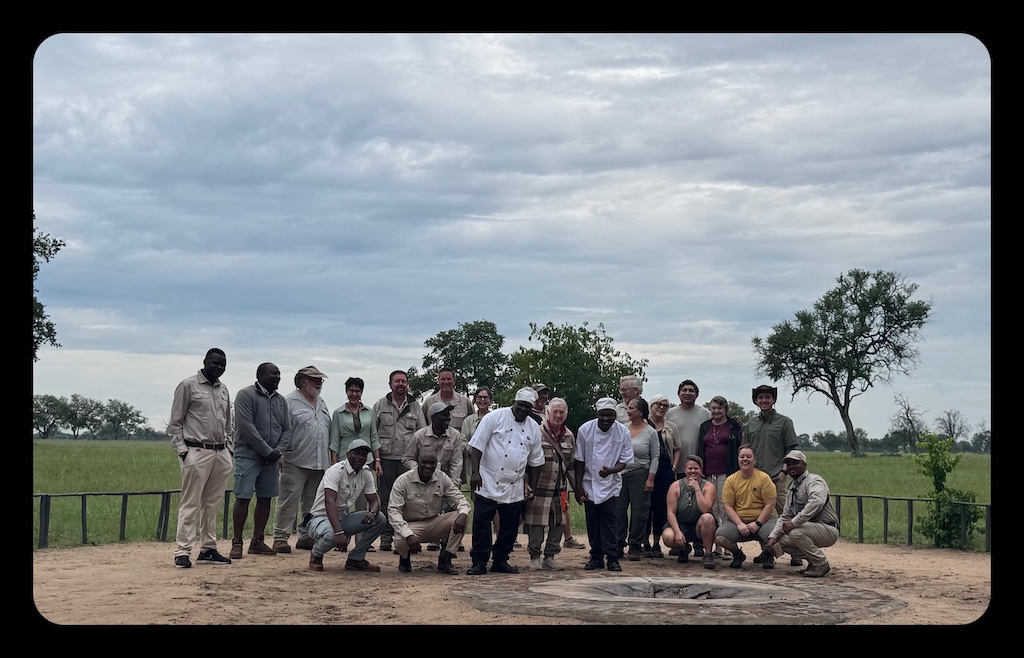
Just before departure from Hwange National Park, the group of campers and staff got together for a photo.
Language
I picked up a few words.
| Word | Translation |
|---|---|
| salibonani | hello |
| siyabonga | thank you |
| tamboca casa | thank you very much |
| siyaphila | we are fine |
| zim zim | cheers! |